
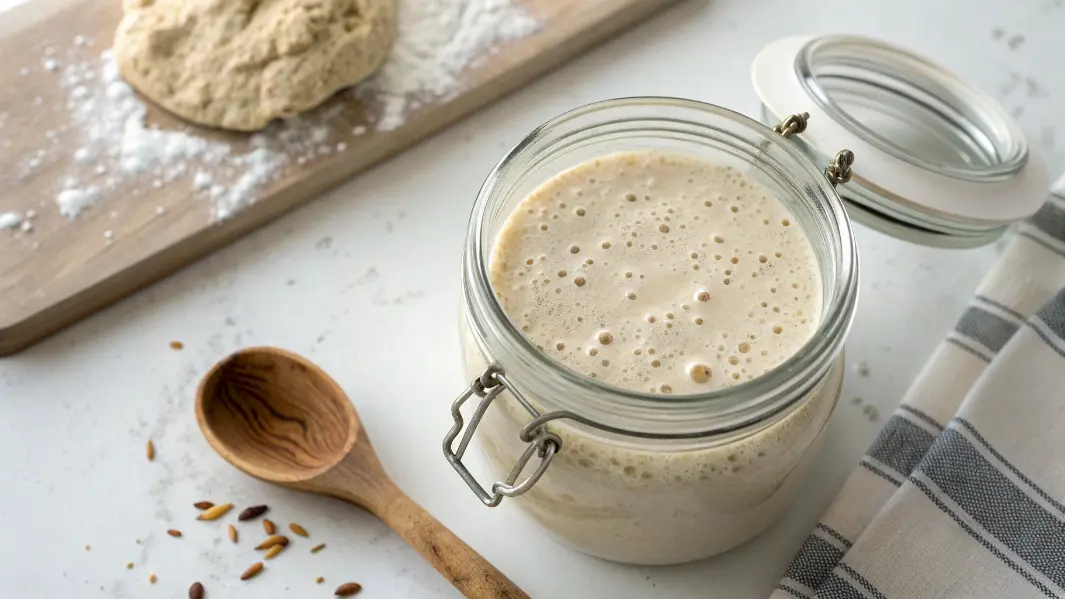
Sourdough Starter Recipe
Quick sourdough starter recipe for happy beginner bakers starts with just flour and water, then uses daily discards and feedings to build strength until the starter reliably rises and falls. Many beginner-friendly methods keep the routine consistent: discard most, then feed equal weights of water and flour (often called a 1:1:1 ratio).
Once your starter is active, you can keep it on the counter with regular feedings or store it in the fridge and feed about once a week, bringing it back to room temperature before baking. With a warm spot and patience, most starters become bake-ready in about a week, though timing varies by temperature and flour choice.
Table of Contents
Table of Contents
Sourdough Starter Recipe

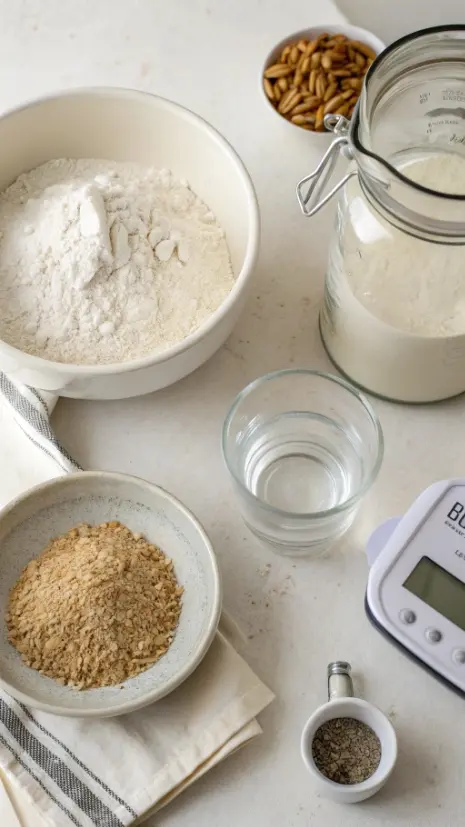
Equipment
- 1 Glass jar (16–32 oz) Wide mouth makes stirring and cleaning easier.
- 1 Kitchen scale Recommended for accurate 1:1:1 feedings by weight.
- 1 Spoon or Spatula For mixing and scraping down sides.
- 1 Loose lid or cloth + rubber band Cover loosely for airflow while protecting the starter.
Ingredients
Beginner Sourdough Starter
- 60 grams unbleached all-purpose flour (or mix of AP + whole wheat/rye) Start small; you’ll feed daily.
- 60 grams filtered water Room temperature.
Instructions
How to Make a Quick Sourdough Starter for Happy Beginner Bakers
- Day 1: In a clean jar, mix 60 g flour and 60 g water until no dry flour remains. Cover loosely and leave at room temperature for 24 hours.
- Day 2: Stir the mixture and let it rest another 24 hours. (Small bubbles may appear.)
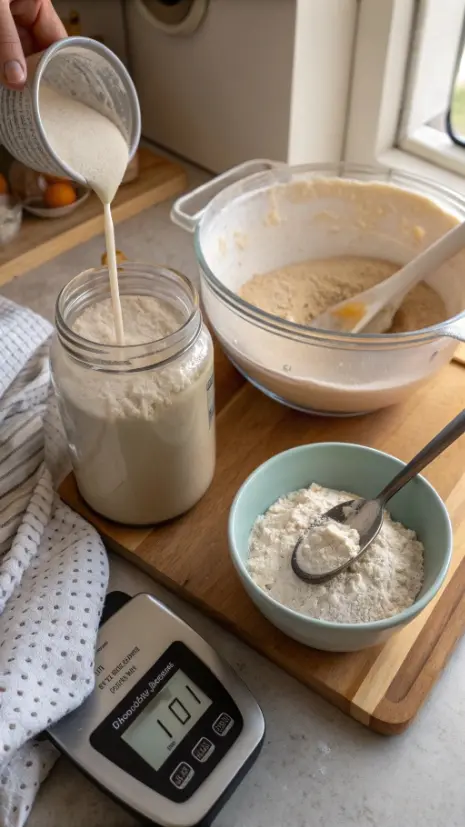
- Days 3–7: Once a day, discard most of the starter (leave about 20 g). Feed with 20 g water + 20 g flour (1:1:1 by weight). Mix well, cover loosely, and let sit 24 hours. Repeat daily until reliably bubbly and rising after feedings.
- When active: Your starter is ready when it rises predictably after feeding and smells pleasantly tangy. Use for baking or keep feeding 1–2 more days for strength.
- Storage: For weekly maintenance, store the starter covered in the fridge and feed about once a week. Before baking, bring to room temperature and give a couple of feedings (about every 12 hours) to strengthen.
Why You’ll Love This Sourdough Starter Recipe
- Only flour + water (no commercial yeast).
- Beginner-friendly routine with simple daily steps.
- Easy to understand feeding ratio (1:1:1 by weight).
- Flexible maintenance: counter for frequent baking or fridge for once-a-week care.
- Gives bread that classic sourdough rise and flavor over time.
Recipe Snapshot
| Recipe Snapshot | |
|---|---|
| Category | Baking Basics / Starter |
| Cuisine | Baking (Global) |
| Prep Time | 5 minutes per day |
| “Cook” Time | 0 minutes |
| Total Time | 7 days (typical) |
| Dietary | Vegan |
| Yield | About 1 cup starter (varies) |
| Best For | Beginners learning sourdough |
Ingredients for Sourdough Starter Recipe
- Flour: Unbleached all-purpose flour works, and whole wheat or rye can help kick-start activity because it’s more nutrient-rich.
- Filtered water: Clean-tasting water supports consistent fermentation.
How to Make the Sourdough Starter Recipe
Step 1: Day 1 (mix)
In a clean jar, mix flour and water until no dry bits remain, then cover loosely (lid not tightened) and leave at room temperature.
Step 2: Day 2 (stir and wait)
Stir the mixture and let it sit another 24 hours; you may see small bubbles or a mild aroma starting.
Step 3: Days 3–7 (discard and feed daily)
Once a day, discard most of the starter and feed what remains with equal weights flour and water (a 1:1:1 feed). This is the beginner-friendly rhythm that steadily strengthens your starter.
Step 4: Watch for “active starter” signs
Your starter is getting close when it smells pleasantly tangy, shows consistent bubbles, and rises and falls predictably after feeding.
Step 5: Get it ready to bake
When it reliably rises after feeding, use it for baking or keep feeding a day or two more for strength.
Pro Tips for Sourdough Starter Recipe
- Use a scale: feeding ratios like 1:1:1 are meant by weight, not measuring cups.
- Keep it warm (but not hot): a warmer spot speeds fermentation, while cold rooms slow it down.
- If your starter seems sluggish, try incorporating some whole grain flour (like rye or whole wheat) to boost activity.
- Don’t worry if it looks active early then slows down—this can happen during the first week as the culture stabilizes.
- Use a loose lid (airflow helps, but you still want protection from dust and pests).
How to Serve Sourdough Starter Recipe
- Make sourdough bread once the starter rises reliably after feedings.
- Save discard for pancakes, waffles, crackers, or quick bakes once the starter is established.
- Use it for pizza dough for extra flavor.
- Build a routine: feed in the morning, bake later if it peaks in the afternoon (timing depends on ratio and temperature).
- Adjust feeding ratio to match your schedule (higher ratios generally take longer to peak).
Make Ahead and Storage
Storing Your Starter
For less frequent baking, store covered starter in the fridge; one common approach is feeding about once a week, letting it start fermenting at room temperature for a few hours after feeding, then returning it to the fridge.
Waking It Up for Baking
A day or two before baking, bring starter to room temperature and give it a couple of feedings roughly every 12 hours to rebuild strength.
If You’re Not Baking Often
Some bakers report starters can last longer in the fridge without feeding, but performance may be weaker and need extra feedings to recover.
For More Recipes, follow me on Facebook and Pinterest
FAQs
What does 1:1:1 feeding mean?
How long does it take to make a starter?
Can I store sourdough starter in the fridge?
Yes—refrigeration slows fermentation, and one common guideline is feeding about once a week.
Why do I have to discard starter?
Discarding keeps the jar from overflowing and keeps feedings manageable while strengthening the culture.