
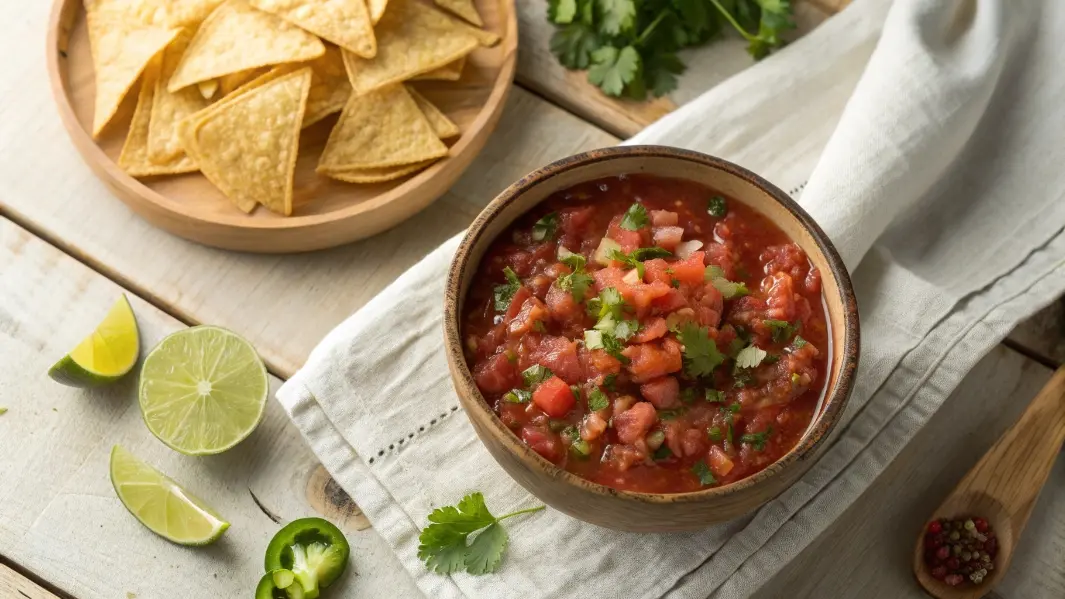
Salsa Recipe
Simple salsa recipe with fresh vibrant restaurant flavor is all about using ripe tomatoes (Roma work great), a little onion and garlic, jalapeño for gentle heat, and plenty of lime and cilantro for that fresh finish. A quick pulse in a food processor gives the best texture—chunky but cohesive—while straining a little liquid can fix watery salsa if tomatoes are extra juicy.
For restaurant-style flavor at home, season with salt and a pinch of cumin, then let the salsa rest in the fridge so the flavors blend. Homemade salsa is best enjoyed fresh, but it typically keeps for several days refrigerated in an airtight container.
Table of Contents
Table of Contents
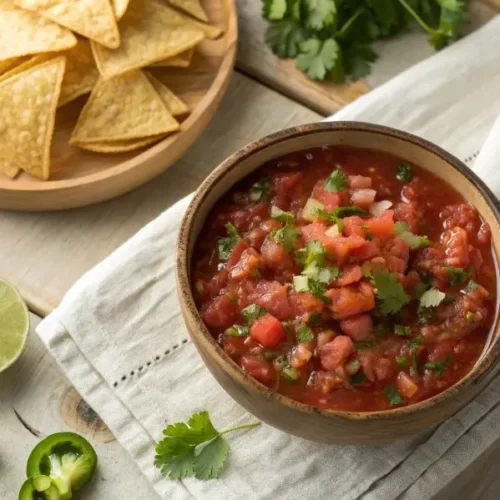
Salsa Recipe

Equipment
- 1 Food processor or blender Pulse for chunky texture (don’t purée).
- 1 Cutting board and knife For prepping tomatoes, onion, garlic, and jalapeño.
- 1 Citrus juicer (optional) Makes lime juicing easier.
- 1 Fine mesh strainer (optional) Use if salsa is watery.
Ingredients
Fresh Restaurant-Style Salsa
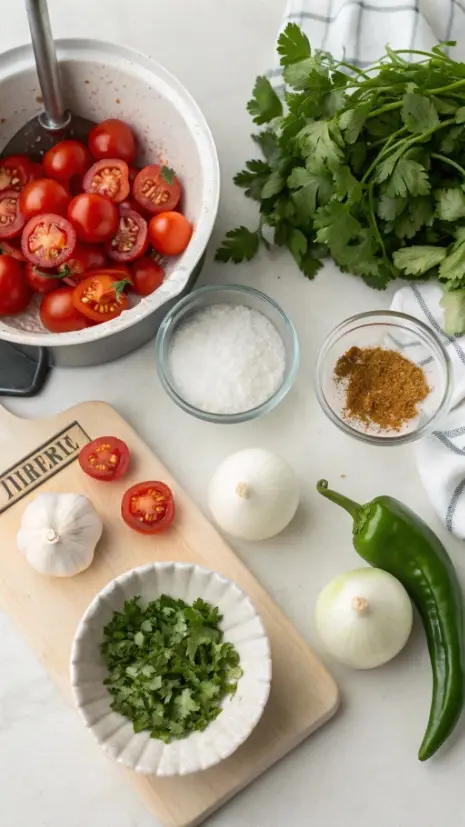
- 1 pounds Roma tomatoes (or other small ripe tomatoes) Cored and cut into large chunks.
- 0.25 medium white onion About 1/4 medium, roughly chopped.
- 1 garlic clove Chopped.
- 1 jalapeño pepper Chopped; remove seeds for less heat.
- 0.25 cup fresh cilantro Loosely packed leaves and tender stems.
- 2 tablespoons lime juice Fresh squeezed; add zest if desired.
- 0.5 teaspoons sea salt Adjust to taste.
- 0.25 teaspoons ground cumin Optional but adds restaurant-style depth.
- 1 pinch sugar (optional) Balances acidity if needed.
Instructions
How to Make Simple Salsa with Fresh Vibrant Restaurant Flavor
- Step 1: Rough-chop the tomatoes, onion, jalapeño, and garlic so they fit easily in a food processor.
- Step 2: Add the onion and garlic to the food processor and pulse until well chopped.
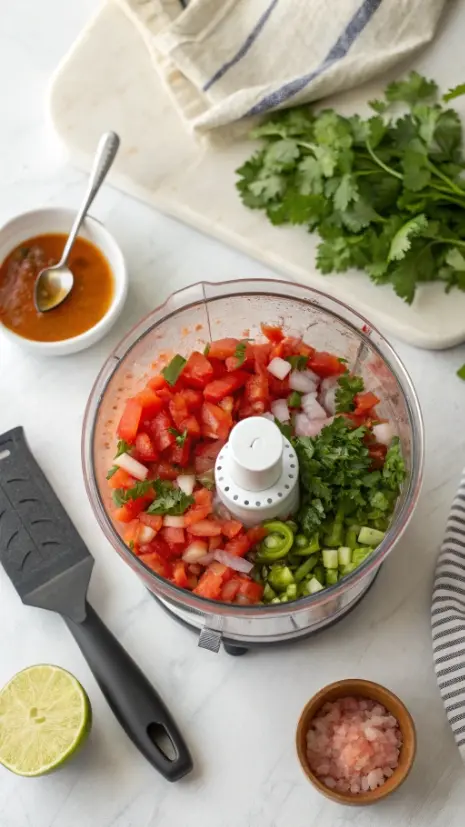
- Step 3: Add the tomatoes, jalapeño, cilantro, lime juice (and optional zest), salt, cumin, and optional pinch of sugar.
- Step 4: Pulse a few times until the salsa is combined but still chunky. Taste and adjust salt, lime, and heat to your preference.
- Step 5: If the salsa is too watery, strain off a little liquid (or strain part of the salsa and mix back in) until you reach your preferred thickness.
- Step 6: Transfer to a container and chill 30–60 minutes for best flavor, or serve immediately.
Why You’ll Love This Salsa Recipe
- Fresh, bright, and ready in about 5 minutes.
- Classic restaurant-style flavor from lime, cilantro, garlic, and cumin.
- Easy to control heat by removing jalapeño seeds or adding extra.
- Works as a dip, taco topper, burrito add-on, or bowl finishing sauce.
- Tastes even better after chilling for 30–60 minutes.
Recipe Snapshot
| Recipe Snapshot | |
|---|---|
| Category | Dip / Sauce / Condiment |
| Cuisine | Mexican-inspired |
| Prep Time | 10 minutes |
| Cook Time | 0 minutes |
| Total Time | 10 minutes (+ optional chilling) |
| Dietary | Vegan, Gluten-Free |
| Serves | About 2 cups |
| Best Served | Chilled with chips or spooned over tacos |
Ingredients for Salsa Recipe
- Roma tomatoes (or other small ripe tomatoes): Fresh base with classic salsa texture.
- White onion: Sharp bite that balances sweet tomatoes.
- Garlic: Adds savory depth (a little goes a long way).
- Jalapeño: Adds heat; remove seeds for milder salsa.
- Fresh cilantro: Signature fresh salsa flavor.
- Lime juice (and optional zest): Brightens and gives restaurant-style tang.
- Salt: Essential for pulling flavors together.
- Ground cumin: Adds subtle warm “restaurant” flavor.
- Pinch of sugar (optional): Helps balance acidity if tomatoes are very tart.
How to Make the Salsa Recipe
Step 1: Chop for easy blending
Rough-chop tomatoes, onion, jalapeño, and garlic so they fit easily in the food processor.
Step 2: Pulse onion and garlic first
Add onion and garlic to the food processor and pulse until finely chopped.
Step 3: Add remaining ingredients
Add tomatoes, jalapeño, cilantro, lime juice (and zest), salt, cumin, and optional sugar.
Step 4: Pulse to your favorite texture
Pulse a few times until chunky and scoopable (avoid over-blending).
Step 5: Fix watery salsa if needed
If salsa looks watery, strain off a little liquid (or strain a portion and mix back in) until it’s your desired thickness.
Step 6: Chill and serve
Chill 30–60 minutes for best blended flavor, or serve immediately if you can’t wait.
Pro Tips for Salsa Recipe
- Use ripe tomatoes for the best naturally sweet, fresh flavor.
- Pulse, don’t purée—restaurant-style salsa is usually not smoothie-smooth.
- If it’s too spicy, remove jalapeño seeds/membranes or use less pepper.
- Salt is non-negotiable: under-salted salsa tastes flat.
- Let it rest—chilling helps the flavors meld.
How to Serve Salsa Recipe
- Classic: serve with tortilla chips as a party dip.
- Spoon over tacos, quesadillas, burritos, or bowls.
- Use as a topping for eggs, rice, or grilled chicken/fish.
- Stir into guacamole for a quick “salsa-guac” shortcut.
- Add a drizzle to roasted veggies for a fresh finish.
Make Ahead and Storage
Storing Leftovers
Store homemade salsa in an airtight container in the refrigerator. Many sources suggest homemade salsa keeps about 4–7 days when properly refrigerated.
Freezing
Freezing fresh salsa isn’t ideal because of the high water content in tomatoes, which can lead to a mushy texture after thawing.
Reheating
Fresh salsa is served cold or at room temperature and is not reheated.
For More Recipes, follow me on Facebook and Pinterest
FAQs
Why does restaurant salsa taste better than homemade?
How do I make salsa less watery?
Can I make salsa without cilantro?
How spicy is this salsa?
It depends on the jalapeño and whether you include the seeds; removing seeds and membranes makes it milder