
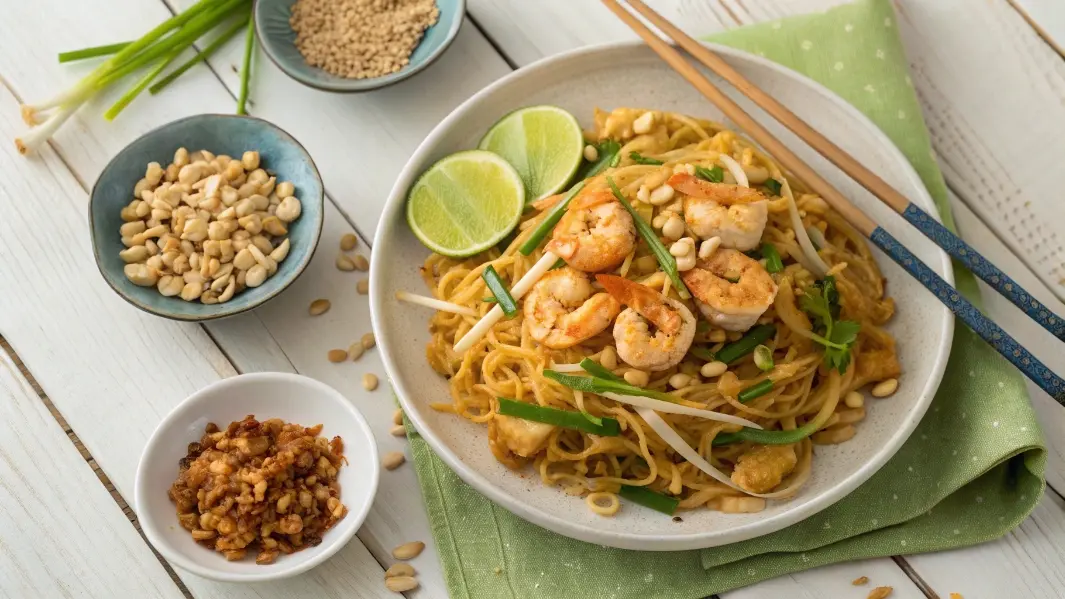
Pad Thai Recipe
Best pad thai recipe with bold authentic flavor at home uses flat rice noodles, a tamarind-forward sauce, eggs, and a protein like shrimp, chicken, or tofu, finished with bean sprouts, chives, crushed peanuts, and lime. A classic method for the sauce is to caramelize palm sugar, stop the caramelization with water, then add fish sauce and tamarind and let the sugar fully dissolve while you prep the rest.
Once the noodles hit the pan, it only takes a few minutes to pull everything together, which is why mise en place matters so much for Pad Thai. Leftovers can be revived with gentle heat and a splash of water or extra sauce to loosen clumped noodles.
Table of Contents
Table of Contents
Pad Thai Recipe

Equipment
- 1 Wok or large skillet A wok gives the best high-heat toss, but a large skillet works well.
- 1 Small saucepan For melting palm sugar and making the Pad Thai sauce.
- 1 Large bowl For soaking rice noodles.
- 1 Tongs or two spatulas For tossing noodles quickly without breaking them.
Ingredients
Pad Thai Noodles
- 8 ounces flat rice noodles (Pad Thai noodles) Soak until pliable, then drain well.
- 3 tablespoons neutral oil For stir-frying.
- 3 cloves garlic, minced
- 1 shallot (optional), thinly sliced
- 2 cups protein (shrimp, chicken, or tofu) Cooked or quick-cooking pieces.
- 2 eggs
- 2 cups bean sprouts Plus extra for serving if desired.
- 1 cups garlic chives or green onions, cut into 2-inch pieces
- 0.5 cup roasted peanuts, crushed Plus more for serving.
- 4 lime wedges For serving.
- 0.5 teaspoons chili flakes (optional) To taste.
Pad Thai Sauce
- 0.33 cups palm sugar (or brown sugar) Chopped if using palm sugar.
- 0.25 cup water Used to stop caramelization and thin sauce.
- 3 tablespoons fish sauce Adjust to taste for saltiness.
- 3 tablespoons tamarind paste or concentrate Adjust depending on sourness/strength.
Instructions
How to Make the Best Pad Thai with Bold Authentic Flavor at Home
- Step 1: Soak the rice noodles in warm water until pliable but not fully soft. Drain well and set aside.
- Step 2: Make the sauce. In a small saucepan over medium heat, melt and lightly caramelize the palm sugar. Add the water to stop caramelization, then add fish sauce and tamarind. Bring to a simmer, turn off the heat, and let it sit while you prep other ingredients until the sugar is fully dissolved.
- Step 3: Prep your station. Crack eggs into a bowl, cut chives/green onions, rinse sprouts, crush peanuts, and portion sauce and protein so cooking can happen quickly.
- Step 4: Heat a wok or large skillet over high heat. Add oil, then sauté garlic (and shallot if using) briefly until fragrant. Add protein and cook until nearly done.
- Step 5: Push everything to the side and add the eggs. Scramble until just set, then mix through the pan.
- Step 6: Add drained noodles and pour in the Pad Thai sauce. Toss continuously until noodles absorb sauce and become glossy and tender, adding a small splash of water if needed to loosen.
- Step 7: Add bean sprouts and garlic chives/green onions and toss briefly to keep them crisp. Plate immediately and top with crushed peanuts, chili flakes if using, and a generous squeeze of lime.
Why You’ll Love This Pad Thai Recipe
- Bold, authentic Pad Thai flavor built on tamarind + fish sauce + palm sugar.
- Quick stir-fry cooking once ingredients are prepped.
- Customizable protein (shrimp, chicken, tofu) without changing the sauce.
- Crunchy toppings and fresh finish from peanuts, sprouts, and lime.
- Leftovers reheat well with a little moisture and gentle heat.
Recipe Snapshot
| Recipe Snapshot | |
|---|---|
| Category | Main Course / Noodles |
| Cuisine | Thai |
| Prep Time | 25 minutes |
| Cook Time | 8–10 minutes |
| Total Time | 35 minutes |
| Dietary | Dairy-free (contains egg; contains fish sauce unless substituted) |
| Serves | 4 |
| Best Served | Fresh, hot, topped with lime and peanuts |
Ingredients for Pad Thai Recipe
- Rice noodles (Pad Thai noodles): The classic noodle for Pad Thai; soak until pliable before stir-frying.
- Tamarind paste (or tamarind concentrate): Signature sour flavor in authentic Pad Thai sauce.
- Fish sauce: Salty umami backbone of the dish.
- Palm sugar (or brown sugar): Sweet balance to tamarind, often melted and lightly caramelized for depth.
- Water: Helps dissolve sugar and makes sauce pourable.
- Eggs: Scrambled into the stir-fry for richness.
- Protein: Shrimp, chicken, tofu, or a mix.
- Garlic and/or shallot: Aromatics for the wok.
- Bean sprouts: Fresh crunch, added at the end.
- Garlic chives (or green onions): Fresh, authentic finish.
- Roasted peanuts: Crushed topping for crunch.
- Lime wedges: Essential bright squeeze right before eating.
- Chili flakes (optional): For heat.
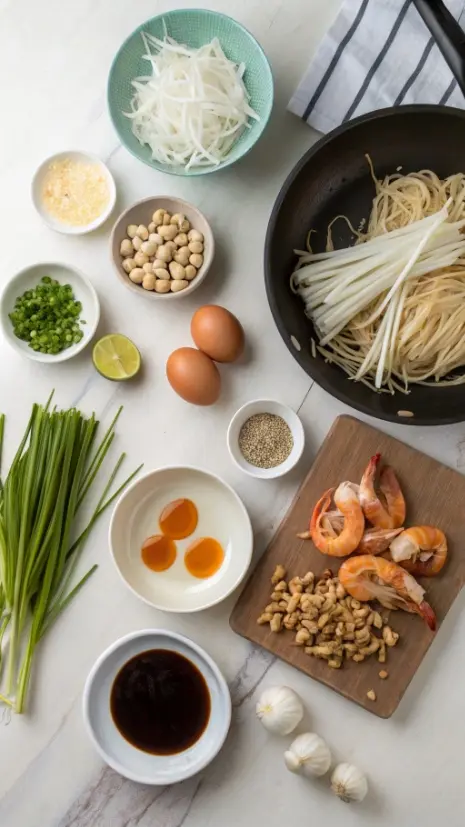
How to Make the Pad Thai Recipe
Step 1: Soak the noodles
Soak rice noodles in warm water until pliable but not fully soft, then drain well.
Step 2: Make the Pad Thai sauce
Melt and lightly caramelize palm sugar in a small pot, add water to stop caramelization, then add fish sauce and tamarind and bring to a simmer; turn off heat and let it sit until the sugar dissolves.
Step 3: Prep your station
Crack eggs, chop chives/green onions, rinse sprouts, crush peanuts, and portion sauce and protein so cooking stays fast.
Step 4: Cook aromatics + protein
Heat wok/skillet, add oil, sauté garlic/shallot briefly, then cook protein until nearly done.
Step 5: Scramble the eggs
Push ingredients aside, scramble eggs in the same pan, then mix through.
Step 6: Add noodles + sauce and toss
Add drained noodles, pour in sauce, and toss continuously until noodles absorb sauce and turn glossy and tender.
Step 7: Finish and serve
Toss in sprouts and chives briefly, then serve immediately with peanuts, chili, and lots of lime.
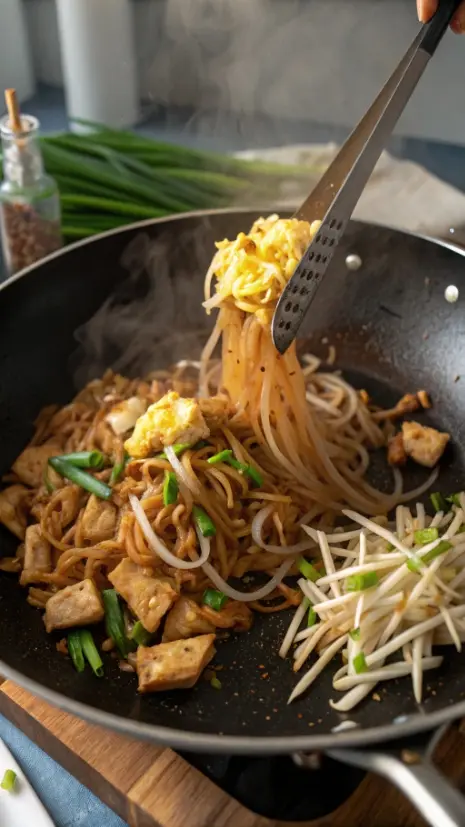
Pro Tips for Pad Thai Recipe
- Use a hot wok and cook in small batches if needed so noodles stir-fry instead of steaming.
- Let the sauce sit after cooking so palm sugar fully dissolves before you start stir-frying.
- Taste the sauce and adjust (more tamarind for tang, more sugar for sweetness, more fish sauce for salt).
- Add sprouts at the end so they stay crisp.
- Pad Thai is best eaten fresh; if making ahead, prep sauce and toppings, then cook noodles right before serving.
How to Serve Pad Thai Recipe
- Top each plate with crushed peanuts and a big squeeze of lime.
- Add chili flakes at the table for customizable heat.
- Serve with extra bean sprouts and chives on the side for crunch.
- Pair with cucumber slices or a simple Thai-style salad to refresh the palate.
- Offer extra Pad Thai sauce for those who like it bolder.
Make Ahead and Storage
Storing Leftovers
Store Pad Thai in an airtight container in the refrigerator and eat within 2–3 days for best texture.
Freezing
Freezing is not ideal because rice noodles can turn soft and mushy after thawing, but it can work in a pinch if tightly wrapped and eaten soon.
Reheating
Reheat in a skillet or wok over medium heat with a splash of water (or extra sauce) to loosen noodles and prevent drying.
For More Recipes, follow me on Facebook and Pinterest
FAQs
What makes Pad Thai taste authentic?
Can I make Pad Thai without tamarind?
Is Pad Thai better with shrimp, chicken, or tofu?
How do I keep noodles from clumping?
Soak just until pliable, drain well, and toss in the hot pan with sauce quickly; for leftovers, add a splash of water when reheating.