
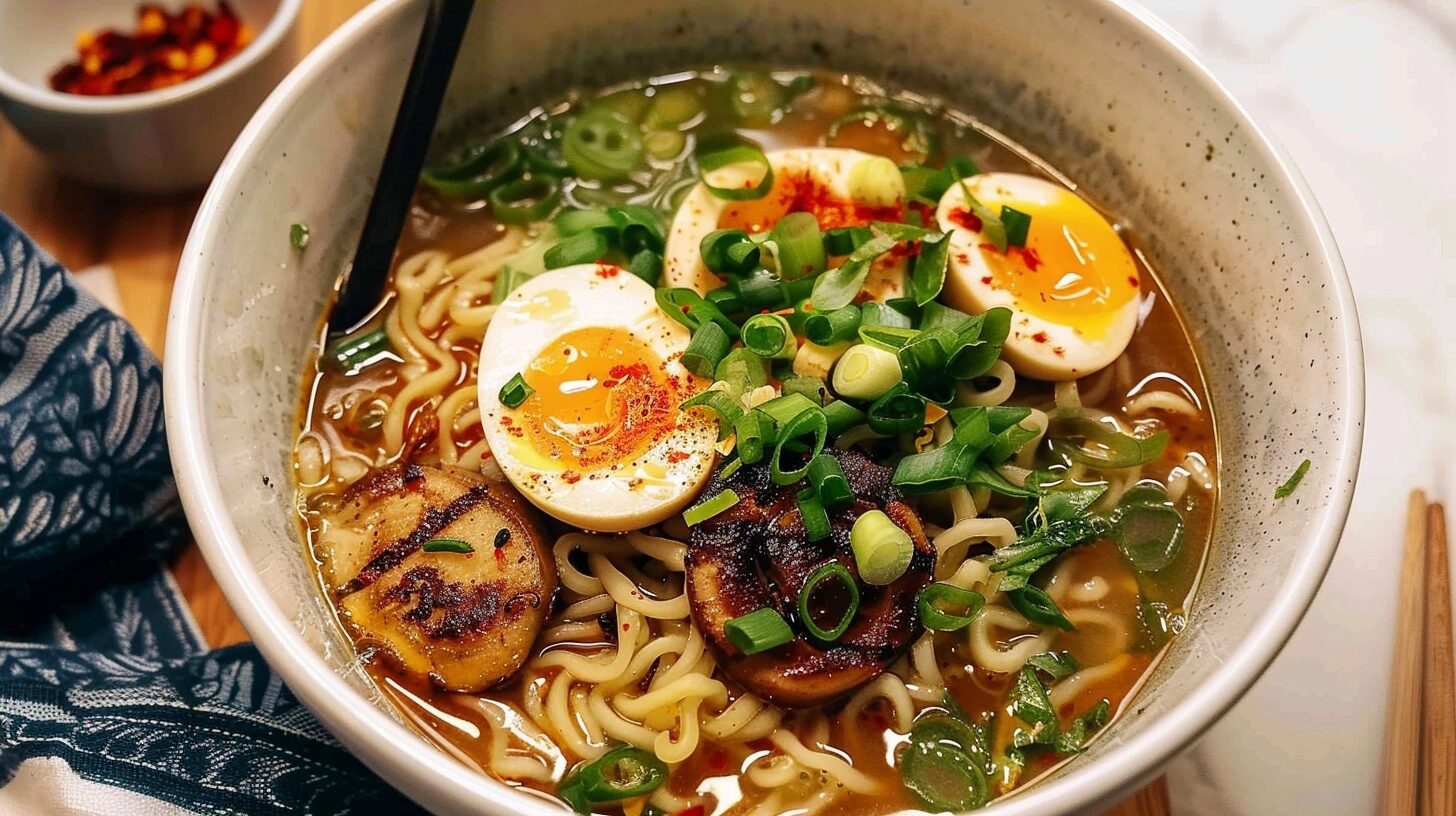
Homemade ramen recipe bowls offer a deeply comforting experience by combining springy noodles with a rich, savory broth and perfectly seasoned toppings. This versatile meal relies on building layers of umami through patient simmering and high-quality ingredients. Whether you crave something spicy or mild, crafting this dish from scratch elevates a simple pantry staple into a restaurant-quality dinner you can enjoy right in your own kitchen.
Table of Contents
Table of Contents
Why You’ll Love This Homemade Ramen Recipe
The primary appeal of this dish lies in the broth. By simmering garlic, ginger, and soy-based aromatics, you create a depth of flavor that is miles away from instant varieties. You control every element, ensuring the saltiness and richness suit your personal preference perfectly.
You will love how customizable this meal is for your family. If you prefer more vegetables, you can easily add bok choy or snap peas. If someone likes protein, a soft-boiled egg or seared chicken breast makes the bowl feel substantial and complete.
Beyond the flavors, there is a rhythmic, therapeutic quality to assembling a bowl of ramen. From slicing the scallions to watching the steam rise from the golden broth, the entire process encourages you to slow down and cherish a meal made with care.
Ingredients of the Homemade Ramen Recipe
For the Broth
- 4 cups vegetable or chicken bone broth
- 2 cloves garlic, smashed
- 1-inch piece of fresh ginger, sliced
- 2 tablespoons soy sauce
- 1 tablespoon miso paste
- 1 teaspoon toasted sesame oil
For the Bowls
- 2 portions of dried ramen noodles or fresh alkaline noodles
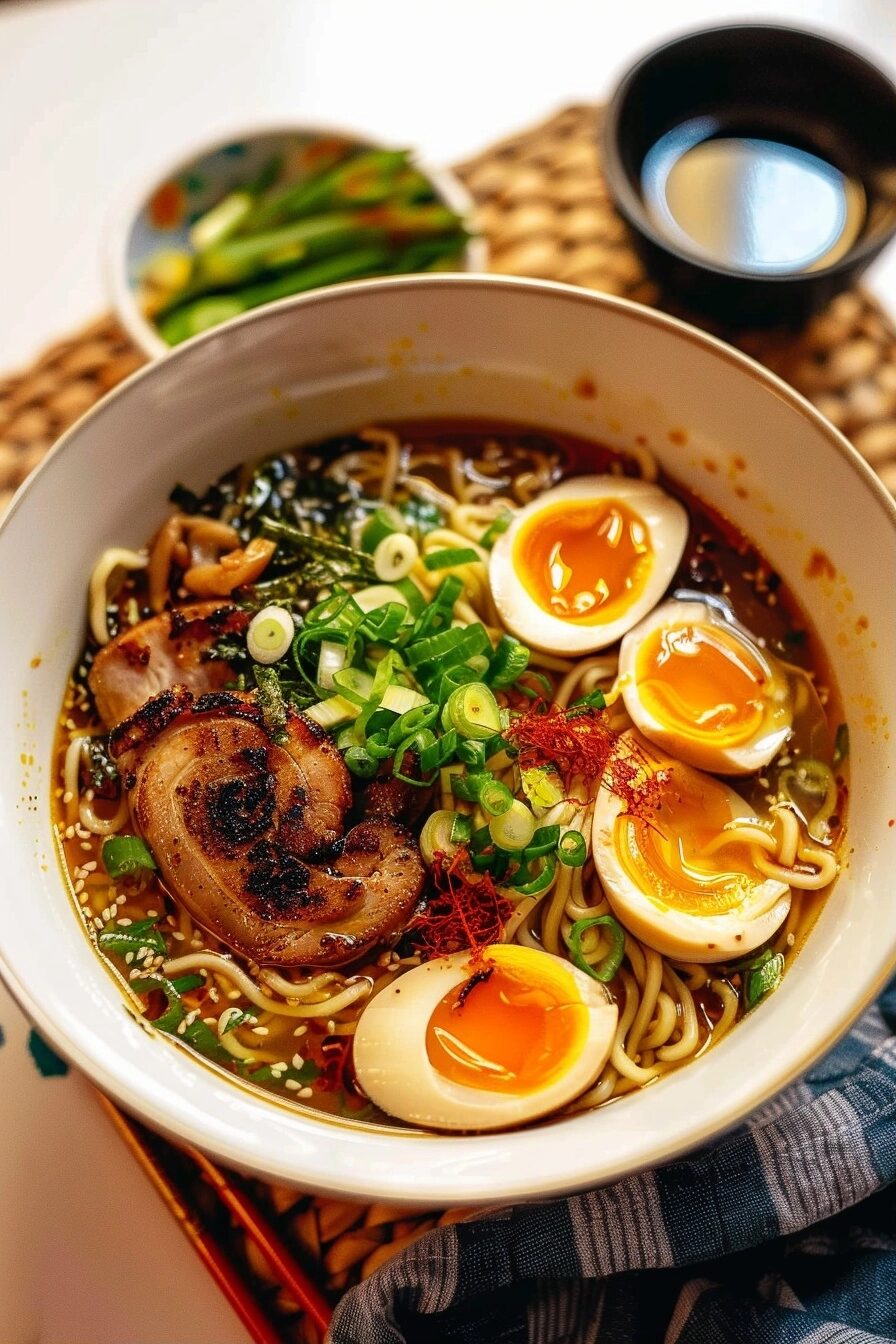
- 2 soft-boiled eggs, halved
- 2 cups baby spinach or bok choy
- 2 green onions, thinly sliced
- 1 teaspoon toasted sesame seeds
- Optional: Sriracha or chili oil for heat
Equipment / Tools Needed
- Large stock pot or Dutch oven
- Fine-mesh strainer
- Tongs for noodles
- Sharp chef’s knife
- Small saucepan for boiling eggs
- Large serving bowls
Step-by-Step Instructions
Step 1: Prepare the Aromatics
Start by heating the sesame oil in your large pot over medium heat. Add the crushed garlic and sliced ginger, sautéing for about two minutes until they become fragrant and golden. Be careful not to burn the garlic, as this will introduce a bitter taste to your broth.
Step 2: Simmer the Broth
Pour the broth into the pot and bring it to a gentle simmer. Whisk in the soy sauce and miso paste until completely dissolved. Let the mixture simmer uncovered for 15 to 20 minutes; this time allows the ginger and garlic to infuse the liquid with their spicy, earthy essence.
Step 3: Cook the Noodles
While the broth simmers, bring a separate pot of water to a boil. Cook the ramen noodles according to the package directions, usually for 3 to 4 minutes. You want them to retain a slight chew, or al dente texture, so avoid overcooking them.
Step 4: Prepare the Toppings
Quickly blanch your spinach or bok choy in the noodle water during the last minute of cooking. Drain everything thoroughly and set aside. Ensure your soft-boiled eggs are peeled and ready for slicing.
Step 5: Assemble the Bowl
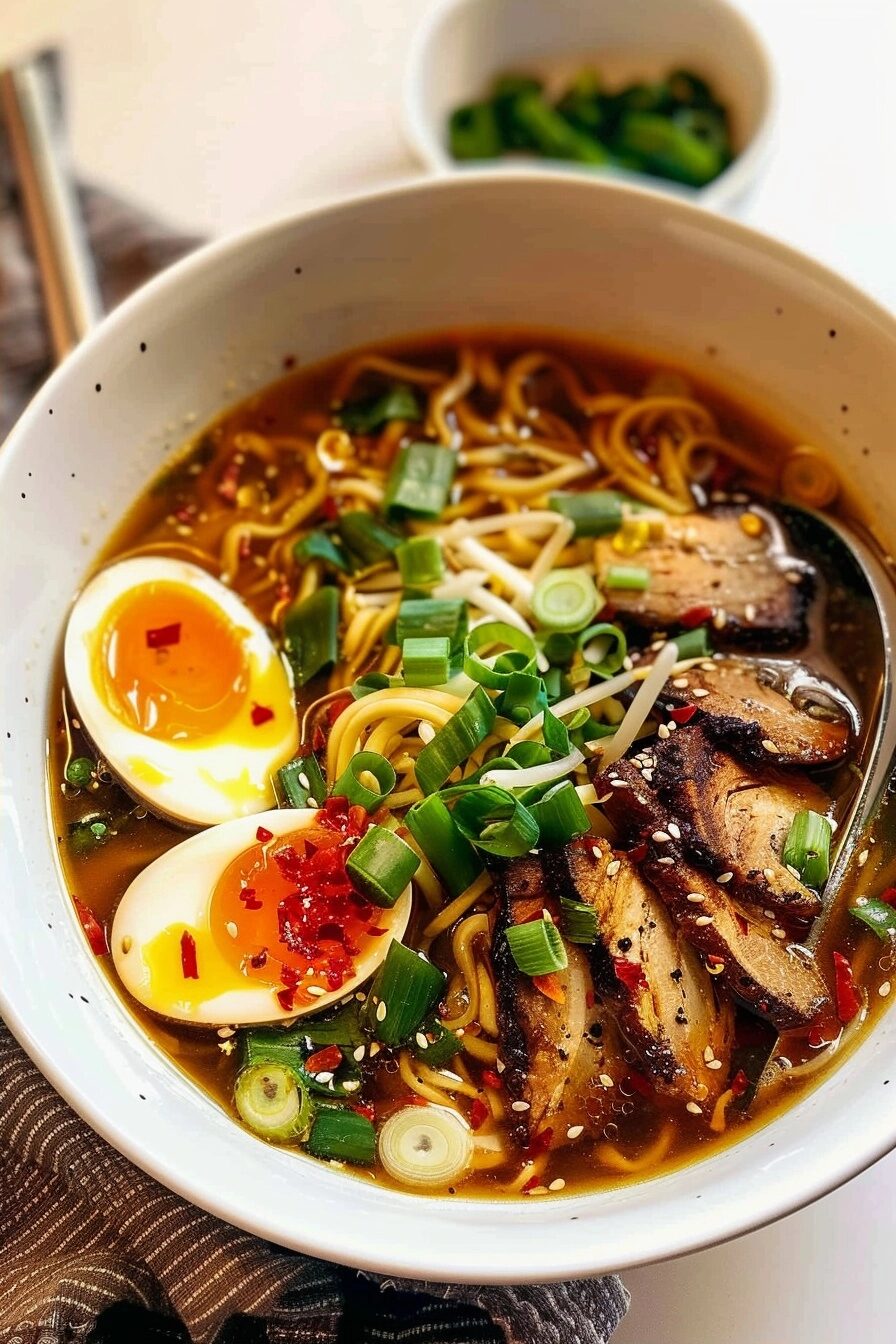
Divide the noodles between two large bowls. Carefully ladle the hot broth over the noodles, using a strainer if you prefer a clear soup. Arrange the greens, sliced egg, green onions, and a sprinkle of sesame seeds on top. Serve immediately while steaming hot.
Tips & Tricks
To achieve the best texture, always rinse your noodles briefly with cold water after boiling them if they are fresh; this stops the cooking process and removes excess starch. For a deeper flavor, let your miso paste sit at room temperature for a few minutes before whisking to ensure it dissolves smoothly without clumping.
Serving Suggestions
Serve this ramen with a side of pickled cucumbers or a crisp seaweed salad to balance the warmth of the soup. During colder months, increase the amount of fresh ginger to add an extra warming sensation that satisfies the soul.
Variations / Substitutions
You can easily substitute the vegetable toppings with sautéed shiitake mushrooms or shredded carrots for added crunch. For a heartier bowl, add thinly sliced seared beef or smoked tofu, ensuring everything remains halal-compliant. If you prefer a thicker broth, stir in a teaspoon of cornstarch mixed with cold water during the final minutes of simmering.
Storage and Reheating
Store leftover broth and noodles in separate containers in the refrigerator to prevent the noodles from becoming mushy. The broth will keep well for up to three days. When ready to eat, reheat the broth on the stove until boiling, then add the noodles for just one minute to warm them through.
Nutritional Info
Calories: 380 kcal
Protein: 18g
Carbohydrates: 55g
Fat: 9g
Conclusion
Cooking this homemade ramen recipe allows you to slow down and enjoy the process of creating a delicious, nourishing meal. The combination of chewy noodles and savory broth creates a harmony of textures that is hard to beat.
Do not be afraid to experiment with your favorite toppings once you master the base recipe. Each bowl you build is a chance to refine your palate and enjoy a quiet, flavorful moment at home.
FAQ
How long can I keep leftover ramen in the fridge?
You can store the broth and noodles separately for up to three days. Storing them together will result in soggy, over-hydrated noodles, so keeping them apart is essential for maintaining a high-quality texture.
Can I use gluten-free noodles for this?
Absolutely, rice noodles or buckwheat soba noodles are excellent alternatives to traditional wheat-based ramen. Just be mindful of their cooking times as they tend to become soft more quickly.
Is it possible to make this ramen ahead of time?
Yes, you can prepare the broth up to 24 hours in advance and keep it in the refrigerator. The flavors will actually intensify overnight, making the final bowl even more delicious when you reheat it.
How do I get the perfect soft-boiled egg?
The secret is to boil them for exactly six and a half minutes before immediately plunging them into a bowl of ice water. This method ensures a firm white and a jammy, golden yolk that anchors your ramen bowl perfectly.
Homemade Ramen Recipe
Prep time: 15 mins
Cook time: 25 mins
Total time: 40 mins
Yield: 2 servings
Homemade Ramen Recipe
Ingredients
- 4 cups vegetable or chicken bone broth
- 2 cloves garlic, smashed
- 1-inch piece of fresh ginger, sliced
- 2 tablespoons soy sauce
- 1 tablespoon miso paste
- 1 teaspoon toasted sesame oil
- 2 portions dried ramen or fresh alkaline noodles
- 2 soft-boiled eggs, halved
- 2 cups baby spinach or bok choy
- 2 green onions, thinly sliced
- 1 teaspoon toasted sesame seeds
- Optional: Sriracha or chili oil for heat
Instructions
- Heat the sesame oil in a large pot over medium heat.
- Add crushed garlic and ginger; sauté for 2 minutes until fragrant and golden.
- Pour in the broth and bring to a gentle simmer.
- Whisk in the soy sauce and miso paste until dissolved.
- Lower heat and simmer uncovered for 15 to 20 minutes to infuse flavors.
- Meanwhile, bring a separate pot of water to a boil and cook the noodles according to package instructions.
- Drain the noodles and divide into large serving bowls.
- Ladle the hot broth over the noodles.
- Top each bowl with halved soft-boiled eggs, fresh spinach or bok choy, and sliced green onions.
- Sprinkle with sesame seeds and add optional Sriracha or chili oil to taste.